
Anxiety is one of the most common challenges children face today. Learn how to spot the signs, respond with empathy, and know when to seek professional support.
Children do not always say, “I feel anxious.” Instead, anxiety may appear as stomach aches before school, repeated questions about what might happen, difficulty sleeping, irritability, tears, avoidance, or a sudden need to stay close to a parent. One difficult day does not automatically mean that a child has an anxiety disorder. Anxiety is a human response to uncertainty or perceived danger. It becomes important to look more closely when the worry is persistent, unusually intense, or begins to interfere with school, friendships, family life, sleep, or ordinary activities.
Look beyond the behaviour
A child who refuses to attend a birthday party may not be trying to be difficult. They may be worried about being judged, getting separated from a caregiver, or not knowing what will happen. A child who becomes angry when homework begins may be overwhelmed by fear of making mistakes. Behaviour is often the visible part of an emotional experience that the child does not yet have words for.
Notice patterns rather than jumping to conclusions. Ask yourself: When does the worry appear? What seems to make it stronger? What helps the child feel safer? Tracking these details for a few days can help parents respond with understanding instead of reacting only to the surface behaviour.
Respond with connection first
Start by getting physically and emotionally close. Use a calm voice and simple language: “I can see that this feels scary,” or “Something about tomorrow is worrying you.” Validation does not mean agreeing that something terrible will happen. It means showing the child that their feelings make sense from their point of view.
Then help the child separate the feeling from the prediction. You might say, “Your worry is telling you that you will not manage. Let us look at what you can do if the worry arrives.” This gently builds confidence without demanding that the child stop feeling anxious immediately.
Small, predictable steps are usually more helpful than sudden pressure. If school drop-off is difficult, a consistent morning routine, a brief goodbye ritual, and a planned check-in may provide more support than a long negotiation. Praise brave effort, not just a successful outcome: “You felt worried and still took one step.”
When to seek support
Consider professional guidance when anxiety lasts for weeks, keeps returning, causes frequent physical complaints, disrupts sleep, prevents participation in age-appropriate activities, or places significant strain on the child or family. A qualified professional can help identify what is maintaining the anxiety and teach the child and caregivers practical coping strategies.
The goal is not to remove every worry from childhood. It is to help children understand what they feel, experience safe support, and gradually discover that difficult feelings can be managed. With patience, predictable routines, and the right help when needed, anxiety can become a signal to listen to rather than a force that runs the whole family’s life.
“A child does not need a perfect parent. They need a steady adult who is willing to pause, listen, and help them take the next manageable step.”
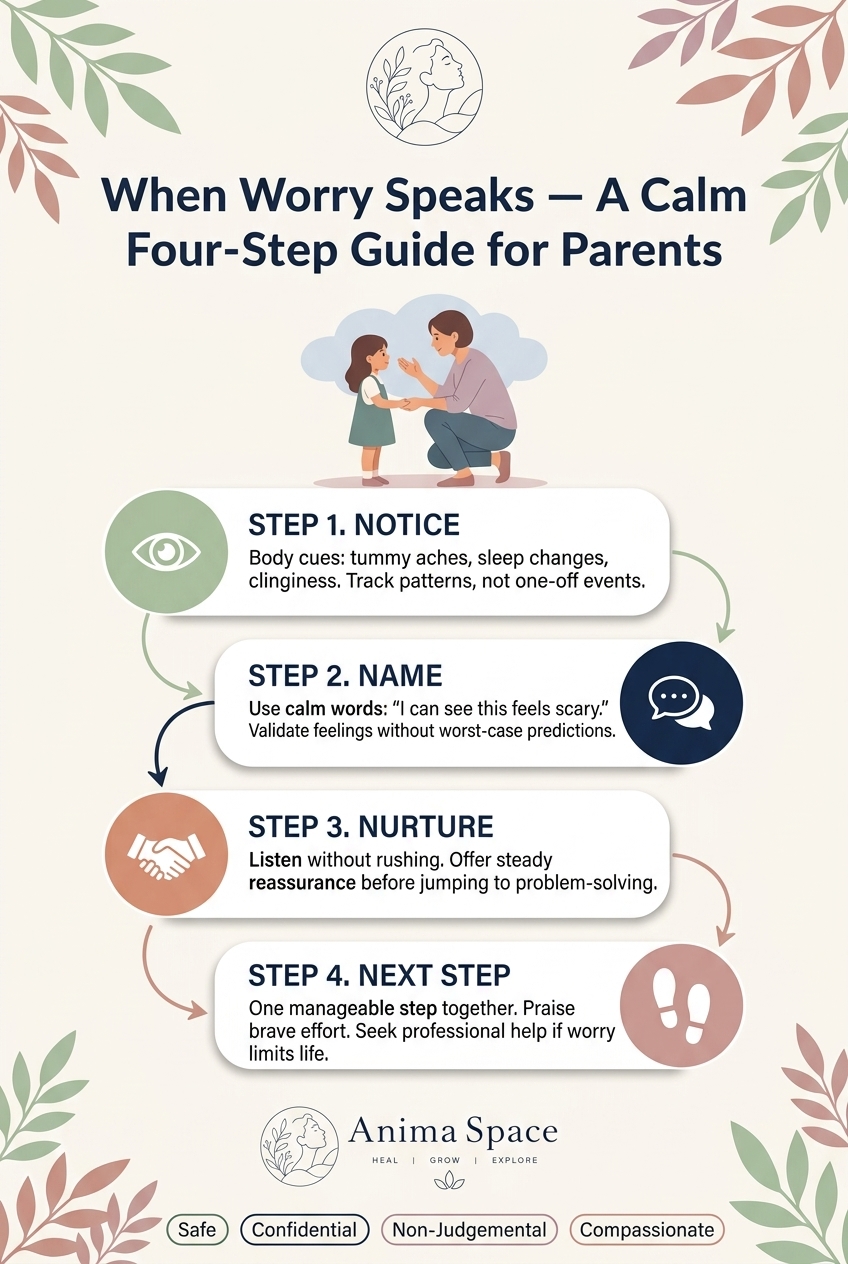
Anima Space infographic: When Worry Speaks — a four-step guide for parents to notice anxiety patterns, name and validate feelings, nurture connection, and take one small next step with their child.
When Worry Speaks
A calm four-step flow for families: Notice → Name → Nurture → Next step
Notice Patterns
Observe body cues (tummy aches, sleep changes, clinginess) and note triggers without jumping to immediate conclusions.
Name & Validate
Use calm words: 'I can see this feels scary.' Help separate the anxious feeling from catastrophic predictions.
Nurture Connection
Listen without rushing and provide steady reassurance before trying to jump into problem-solving mode.
Small Next Steps
Take one manageable step together, praise brave efforts, and consult a professional if worry persistently limits life.

Prashanthi Simon
Psychologist, Writer, Communications Trainer, Well-being Coach, Career Counsellor, & Child Psychologist with 15+ years of experience.
Learn more about Prashanthi →